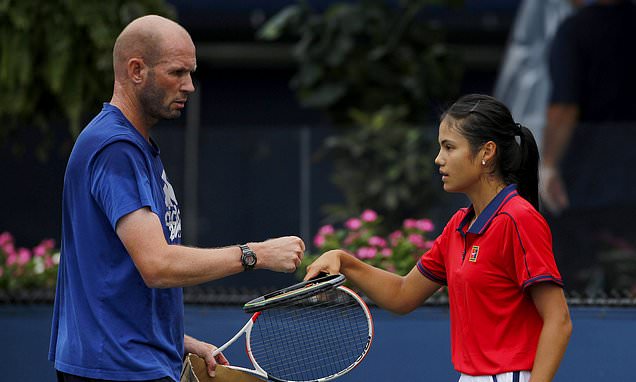

Few stories in tennis have been as meteoric — or as mysterious — as Emma Raducanu’s rise to stardom. In 2021, she shocked the world by winning the US Open as a qualifier, becoming the first player in history to achieve that feat. But behind her historic victory lies a web of behind-the-scenes tension, shifting loyalties, and a coach who later claimed he was the one who “made her.”
That claim — and what followed — would fracture one of the most intriguing partnerships in modern tennis.
The Rise of a Teenage Star
Before fame, endorsement deals, and center-court headlines, Emma Raducanu was a teenager grinding through the British junior circuit. Her natural talent was obvious — smooth movement, effortless timing, and an unshakable calm on court.
One figure who took early credit for helping shape her success was coach Nigel Sears, a respected figure who had previously worked with stars like Ana Ivanovic. Sears was among the early mentors to help refine Raducanu’s game, guiding her through technique, discipline, and mental focus.
But as her profile grew, so did the tension over who truly “discovered” and “developed” her.
The Coach Who Claimed He ‘Created’ Her
After Raducanu’s US Open triumph, a lesser-known figure — one of her earlier youth coaches — stepped into the media spotlight, claiming that he had “created” her champion mindset and shaped her from day one.
In interviews, he suggested that much of the credit for her success should go to him, not to the team around her during her breakout season. His comments made waves across the tennis world — and reportedly did not sit well with Raducanu’s camp.
The issue wasn’t just about ego; it was about truth. According to insiders, several details in his story were exaggerated — timelines didn’t add up, and some accounts of his influence were flat-out misleading.
The Lie That Broke the Trust
Sources close to Raducanu said that when the coach’s comments surfaced, she was deeply disappointed.
Having worked with multiple coaches through her development, she had always emphasized the value of teamwork — that every mentor contributed something unique along the way.
But the public attempt to “claim” her success — and the distortion of facts — reportedly broke her trust.
From that point on, her circle became tighter, more private, and carefully managed.
Raducanu, known for her quiet discipline and professionalism, never directly addressed the controversy. Yet her silence spoke volumes — she preferred to let her tennis do the talking.
A Lesson in Fame and Loyalty
The fallout revealed something bigger than just a broken professional relationship. It exposed the darker side of sudden fame — where success often invites opportunists eager to share the spotlight.
For Raducanu, it was a wake-up call early in her career: in tennis, as in life, not everyone cheering for you is truly on your side.
Since then, she’s been careful about her team dynamics, cycling through coaches until finding the right fit — a process that, while criticized by some, shows her determination to control her own destiny.
Emma Raducanu Today: Stronger, Smarter, and More Guarded
Now older and wiser, Raducanu has embraced her independence.
After injury struggles and months away from competition, she’s been making a thoughtful comeback — stronger physically and more grounded mentally.
Those close to her say she’s learned to separate gratitude from dependency — appreciating her past mentors while refusing to let anyone rewrite her story.
In many ways, that’s the greatest victory of all: the evolution of a young champion who learned that not every coach, mentor, or “creator” deserves a place in her legacy.


